Deflation in Thailand: Why This Is Your Window of Opportunity for Investment
Thailand is in a rare economic situation: tourism is growing, demand for rental housing is high, but prices across the country are barely rising or are even falling. This phenomenon is called negative inflation. For a property investor, it means one thing: your property management costs will not be eating into rental income through inflation-driven growth.
With the right property choice and transparent management, investment payback can arrive significantly faster than in overheated markets in other countries. Let's look at how this works and why now may be an ideal moment to act.
Thailand's Paradox: Tourism Is Growing, Prices Are Falling
More tourists → demand grows → prices rise → inflation.
In Thailand, the picture is different. The country has recovered after Covid and continues to receive tourists in record volumes. Demand for rental housing remains high. But the overall price level? It is barely rising or even falling. Source: https://www.bot.or.th/content/dam/bot/documents/en/our-roles/monetary-policy/mpc-publication/monetary-policy-report/MPR_2025_Q3.pdf
This is not accidental. The government deliberately restrains prices for energy, utilities, and key goods. Competition among service providers also remains intense. The result is negative or near-zero inflation, a rare phenomenon against the backdrop of global price growth.
For a property investor, this means your property maintenance costs will not rise year after year.
What Deflation Is and Why It Works in the Owner's Favor
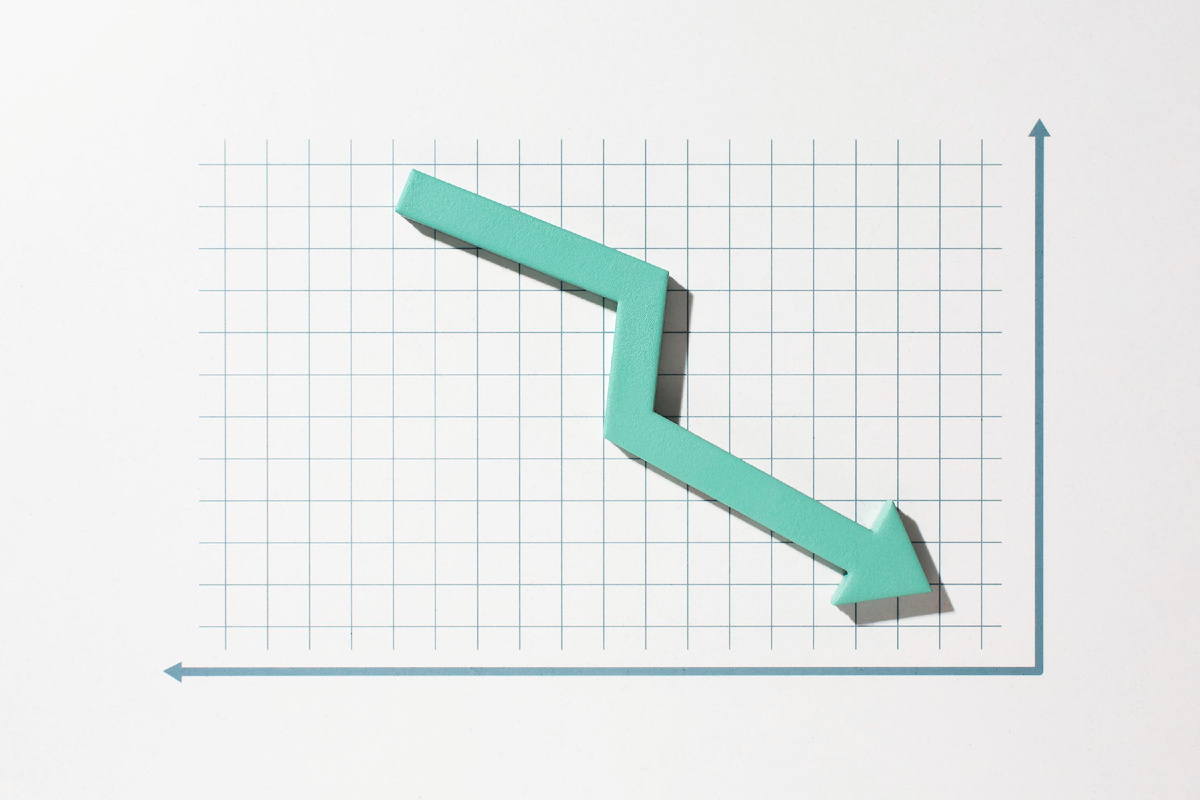
Deflation means that prices for goods and services do not rise, or even fall, in nominal terms.
For most economies, this is a problem: people delay purchases expecting prices to fall further, creating a slowdown spiral. But for a property investor in a growing tourist center, it is a hidden competitive advantage.
Scenario 1: Normal Inflation in Overheated Markets
- You bought an apartment.
- Rental income grows more slowly than utilities, taxes, and management costs.
- Real yield is gradually eaten away by inflation.
- Payback shifts further into the future by months or even years.
Scenario 2: Thailand with Negative Inflation
- You bought an apartment.
- Rental income stays stable or grows thanks to tourism.
- Management and maintenance costs do not rise, or even decrease.
- Real yield remains predictable.
- Payback arrives faster.
That is why, with low or negative inflation, property investment payback becomes a mathematical fact, not just hope.
Tourism Growth Means Stable Demand for Short-Term Rentals
Tourism in Thailand is not a temporary spike. It is a structural trend. The country offers a combination of tropical climate, low cost of living, and developed infrastructure that is hard to find elsewhere.
The result? High and stable demand for rental housing.
Hotels operate with high occupancy. Condos and apartments managed for tourist flow have occupancy in the range of 70–80% of available capacity. Nightly rates remain attractive for travelers and profitable for owners.
And what does stable tourist demand mean? Predictable rental income. Month after month. Year after year. With deflation, this income is not eaten away by rising expenses. It works in your favor.
Key takeaway: when expenses do not rise and income is stable, payback becomes inevitable.

Price Separation: Why Tourists Pay More While Living Costs Less
An important nuance many people miss: there is a clear separation between tourist prices and local prices.
A tourist sees:
- Hotel rooms with inflated rates.
- Restaurants in tourist areas with international prices.
- Tours and entertainment priced for foreigners.
A property owner or long-term resident sees a different reality:
- Food at local markets and local cafés.
- Utilities controlled by the government.
- Modest costs for transport and basic needs.
With deflation, this difference works only in your favor: tourists pay international rates, while the owner's expenses stay at local prices that do not rise.
This means the margin between income and expenses remains high and may even improve over time.
The Math of Payback During Deflation
Investment payback depends on a simple formula:
Payback = Investment / (Annual income – Annual expenses)
During deflation, the following happens:
- The investment is fixed: you pay once when buying.
- Annual income grows or remains stable thanks to tourist demand.
- Annual expenses decrease or remain unchanged because there is no inflation.
The result? The numerator, income minus expenses, grows, while the denominator, the investment, stays in place.
This means payback comes faster than you expect. It is not magic. It is simple math.
A practical logic example:
- With 5% inflation and the same yield, payback may be 14–15 years.
- With 0% inflation in Thailand and the same income, payback may shorten to 10–12 years.
- With -0.5% deflation, payback may fall to 9–11 years.
And that is only because expenses are not being inflated. Add growing tourist demand, and payback can become even shorter.
The Real Problem: Why Owners Lose Up to 30% of Income
But there is a dangerous catch. Even with deflation and growing tourism, most property owners in Thailand earn much less than they could.

Why? Because management companies often work through opaque structures.
Typical problems:
- Inflated maintenance expenses by more than 30%.
- Underreporting of real occupancy: actual occupancy is 70–80%, while reports show 50–60%.
- No documentary proof of expenses.
- Hidden commissions and income-capture schemes.
As a result, the owner does not see the real numbers until the end of the year and loses at least 200–700 thousand in local currency annually: the very margin that should support faster payback.
Conclusion: deflation can give you an advantage, but only if you fully control your property management. Otherwise, that advantage can simply be taken from you.
Case 1: From Losses to Income
Alexander, a programmer from Moscow, bought a property: a 2-bedroom, 69 sq.m condo at Karon Butterfly, Karon Beach.
Before switching to transparent management:
- Loss: negative annual reporting.
- Main problems: constant downtime, opaque expenses, and no real control.
- The owner did not know why the apartment was empty while the bills kept growing.
After transparent tech-enabled management was introduced, including smart locks, a personal dashboard, and real-time control:
- Occupancy: 78% (285 days out of 365).
- Income: 358% growth compared with the previous year.
- The owner now sees every check-in and every payment.
Alexander calls his property a "retirement program": stable and predictable. Deflation combined with transparent management works perfectly.
The Solution: Transparent Management + Deflation Advantage
To maximize the payback of a property investment in Thailand, you need two things:
- The right property choice for your budget and goals.
- Transparent management with full control over income and expenses.
With proper management, you get:
Real-time financial visibility.
You see every payment, every guest, and every expense, not once a year in a report, but daily in your personal dashboard.
Occupancy maximization.
Dynamic pricing, booking management, and marketing use tourist demand effectively. Occupancy increases from 50–60% to 70–80%.
Expense control.
You see where the money goes and can manage costs. Not inflated management-company bills, but real numbers.
Predictable income.
Instead of unexpected losses, you get stable monthly cash flow.
With deflation, this means income stays high, expenses do not rise, and payback becomes inevitable.
Case 2: Stable Yield During Deflation
An investor bought a studio in Phuket, in the Kathu area. Under the previous management company, it generated losses. After switching to transparent management with KOYA Company:
- Management: transparent and technology-based, with smart locks and dashboard control.
- Commission: 20% instead of 30–40%.
- Occupancy: 78% instead of 45–65%.
- Result: deflation works in the investor's favor: expenses do not rise and income is stable.
The owner now receives predictable income every month instead of waiting until year-end to find out whether the property made a loss or a profit.
Three Steps to the Right Property Investment in Phuket, Thailand
Step 1: Define Your Real Budget and Goals
Not all properties are the same. Not all locations are equally profitable. You need a personalized consultation to understand:
- What investment budget makes sense in your case.
- Which area best fits your goals, such as a popular tourist center vs. a calm area.
- What minimum yield you can realistically expect.
- How quickly the investment may pay back with proper management.
Step 2: Select a Specific Property
After defining your profile, you need to find a property that:
- Is located in an area with high tourist demand.
- Has the right type, such as a studio, 1–2 bedroom apartment, or villa, for the target market.
- Is in a project with a good reputation and infrastructure.
- Can be placed under short-term rental management.
- Has potential for value growth.
This requires expertise and developer contacts. You should not have to do it alone.
Step 3: Set Up Management So Payback Actually Works
After the purchase, the most important part begins: property management.
This is where most owners lose. Instead, you need management that provides:
- 100% financial transparency: you see income, expenses, and occupancy in real time.
- Technology, including smart locks and management systems, to maximize occupancy and control costs.
- Professional service for tourists, which supports high ratings and repeat bookings.
- Dynamic pricing to optimize income under different demand levels.
During deflation, this kind of management is not a "nice to have". It is a must-have for faster payback.
Buying Property in Thailand Is a Window of Opportunity That Will Not Stay Open Forever
Why now is a critical moment to act
Deflation is a temporary phenomenon. The economy changes. Policy changes. In a year or two, the situation may be completely different.
Right now:
- Tourism is growing.
- Prices are stable.
- Demand for rental housing is high.
- Investment payback is at its strongest.
This is a window. And it can close.
People who start investing now will have an advantage over those who wait, because in six months or a year, conditions may change.
Does this mean you need to act immediately?
Yes, but reasonably. Not in panic, but with calculation. With a free consultation. With an analysis of your budget. With an understanding of real payback.

How to Get Started: Four Simple Steps
Step 1: Fill Out the Form or Write to Us
Tell us about your budget and goals. It takes 2 minutes.
Step 2: We Send a Specific Calculation
We will show you real numbers: how quickly payback may happen specifically for your budget and goals.
Step 3: We Arrange a Free 30-Minute Consultation
We will discuss your situation, answer your questions, and explain how payback works during deflation.
Step 4: Optionally, We Start Searching for the Ideal Property
After the consultation, if you are ready, we will select specific properties that match your parameters.
Step 5: After Purchase, Set Up Transparent Management
We will help you rent out the apartment properly through our management service with full financial visibility, so payback can arrive as quickly as possible.
Final Thought
Thailand with negative inflation is a rare combination:
- Growing demand: tourism.
- Stable expenses: deflation.
- Accessible prices: a market that is not yet overheated.
It will not stay this way forever. But right now, at this moment, this is your window of opportunity.
If you are seriously considering investing in property abroad and want to maximize payback, start with a consultation.
It is free. The conversation takes 30 minutes. But the information may change your financial future.
Contacts for Consultation
📱 Telegram: @I_am_Koya_boss
💬 WhatsApp: +66 91-778-9777
📧 Email: info@koya.company
We are waiting to hear from you. The window of opportunity is open right now.